
The fight over Sesame Street’s Bert and Ernie as a gay couple, explained
The history of Bert and Ernie as queer icons is a history of people being incensed by their status as queer icons.
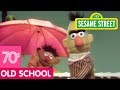
Are Bert and Ernie gay? It depends whom you ask.

Sesame Street has always had one consistent official answer (no, they’re
not), but that hasn’t stopped the two famous felt roommates from
becoming gay icons and occupying a unique role in the queer rights
movement. Controversy over their perceived homosexuality has raged
intermittently for decades, spearheaded by both allies and adversaries —
and a new flare-up shows that it’s not going away anytime soon.
On Sunday, Mark Saltzman, who won seven Daytime Emmys for his work as a
writer on Sesame Street between 1985 and 1998, gave a deeply moving and
wide-ranging interview to the queer culture outlet Queerty. In it, he
discussed writing Bert and Ernie as reflections of himself and his
longtime partner, Arnold Glassman (a renowned editor who worked on films
like Raising Arizona as well as the iconic queer documentary The
Celluloid Closet before his death in 2003).
“When I was writing Bert & Ernie, they were [lovers],” Saltzman said. “I didn’t have any other way to contextualize them.”
Saltzman’s comments about Bert and Ernie were given in the context of a
profound interview with David Reddish about Saltzman’s experience coming
out and coming of age in the shadow of the AIDS epidemic. But Queerty
ran the article with a headline announcing an “answer” to the question,
“Are Bert and Ernie a couple?” And the age-old debate about Bert and
Ernie became the story.
On Tuesday, Saltzman’s “answer” went viral, prompting a massive
outpouring of debate and controversy over the two Muppets — and a
official negation from Sesame Street — in the form of a now-deleted
tweet that contained the following statement:
The Sesame Workshop’s statement that Bert and Ernie “do not have a
sexual orientation” provoked a day of widespread backlash. Many people
expressed sadness and outrage, pointing out that Sesame Street and the
Muppets have always included a wide range of heteronormative romantic
(and implied sexual) expression and that the official statement seemed
to be ignoring this history to erase queer identity.
A few hours later, the company tried again with a different statement,
apparently intended to override the previous tweet, which was deleted on
Wednesday afternoon. The new attempt reminded everyone that Sesame
Street is “inclusive” but that Bert and Ernie are still just friends.
The official negation was echoed by puppetmaster Frank Oz, who
originally performed Bert opposite Jim Henson as Ernie, and who stated
on Twitter that “They’re not [gay], of course.” Yet Oz went on to admit,
when challenged by fans who wondered why he seemed to be assigning Bert
a heterosexual orientation by default, “I have not had to think about
my own sexual orientation as something that needs to be validated.”
This second remark from Oz underscores the faulty assumptions behind
Sesame Street’s response. It also acknowledges that queer fans are used
to being erased, and have been trained by decades of media to
extrapolate queer subtext from canonical narratives that refuse to
openly acknowledge their existence.
For those queer fans looking for narrative subtext, there’s plenty to be
found in the personas of Bert and Ernie; after all, there’s a reason we
as a culture have been discussing their relationship for decades, a
reason that they continue to be held up as gay icons across generations —
and a reason people have spent decades being hopping mad about it. Bert and Ernie were loaded with queer subtext from the very beginning
Created in 1969 — they were the only original Muppets to debut with
Sesame Street’s original pilot — Bert and Ernie seem to have been
clearly modeled off Neil Simon’s famous Odd Couple, Oscar and Felix, who
were tremendously popular and had permeated the culture in the ’60s.
Longtime Muppeteer Eric Jacobson, who has played Bert since 1997, has
gone on record as saying he believes The Odd Couple was the inspiration
for Bert and Ernie. He used this as a reason to dispute their implied
queerness (“If you know the genesis of the characters, it’s an absurd
idea&rdquo, but it should be noted that Bert and Ernie appeared on
the scene a year before the television version of The Odd Couple, which
was noted for its queer subtext and sexual ambiguity.
Over the years, Bert and Ernie’s subtextual queerness has become
incredibly obvious to anyone with eyes. Take, for example, the couple’s
appearance in the 1978 special Christmas on Sesame Street, in which they
get an entire subplot borrowed from O. Henry’s famous short story “The
Gift of the Magi.”
In that story, a newlywed pair of lovers sacrifice their most beloved
possessions in order to buy each other Christmas gifts — because of
course their deep love for each other is the real gift. Given the
well-known romantic connotations of this short story, it’s incredibly
easy to see how even in the early days, Bert and Ernie’s relationship
seemed to be more than just friendship.
That’s just scratching the surface of the kinds of things Bert and Ernie
do that seem to transcend the normal bounds of friendship and being
roommates. They share a bedroom. Ernie sits on Bert’s lap. Bert watches
Ernie take baths. They’re famously seen arm in arm together on the cover
of a Sesame Street album called Love. It’s all pretty gay!
In 1980, Kurt Andersen, writer and later host of the public radio show
Studio 360, wrote what may be the first textual reference to Bert and
Ernie’s queerness. In his book of comedic essays, The Real Thing, he
wrote:
Among homosexuals, Bert and Ernie of Sesame Street are the real
thing. Bert and Ernie conduct themselves in the same loving, discreet
way that millions of gay men, women and hand puppets do. They do their
jobs well and live a splendidly settled life together in an impeccably
decorated cabinet.
Andersen, whose wife worked for Sesame Street, told the Wall Street
Journal in 2009 that he intended his statement to be nothing more than a
joke. “I have no memory of that being a ‘rumor’ at all in 1978-80 when I
was writing The Real Thing,” he stated then. “As far as I know, it was
simply and purely a joke of mine.”
Reached for comment, Andersen stood by his 2009 statement. “I don’t
believe there was much public discussion, serious or otherwise, about
the crypto-gayness of The Odd Couple in the 1960s and ’70s,” he wrote in
an email.
“That kind of discourse only appeared concerning work about straight
characters by gay writers — most famously, whether Who’s Afraid of
Virginia Woolf was somehow ‘really’ about a gay couple,” he added. “In
1980, when I published my Bert & Ernie thing, there were still no
out gay characters in mass media. The piece of the zeitgeist I was
responding to was, just a decade after Stonewall (which BTW occurred a
few months before Sesame Street premiered) and the first pride march,
the freshly ‘normalized’ nature of out gayness in places like New York.”
But while Andersen may have been joking, the zeitgeist he wrote about
was crucial in shaping the perception of Bert and Ernie as a couple.
That shape would grow more pronounced as the ’80s went on, due in large
part to one man who would go on to write them throughout the decade in
which they emerged as controversial queer icons.
Saltzman’s comments about Bert and Ernie can’t be extricated from the
rest of his incredible interview about coming out in the shadow of AIDS
Altogether, Saltzman’s Queerty interview has little to do with Muppets.
In fact, all of the mentions of Muppets, including Saltzman’s comments
about Bert and Ernie, are made in the context of discussing queer
identity and other kinds of lived identities as experienced by the
creative team and guests who worked on Sesame Street over the years.
The conversation between Saltzman and interviewer Reddish is
illuminating and poignant, frequently returning to Saltzman’s experience
as a young gay man in the early ’80s, one finding his way out of the
closet just as the AIDS epidemic was beginning to be widely understood.
“Thinking about being out at that time, it’s hard to extricate that from
living in the middle of an epidemic,” he told Reddish. “People just
vanished, and everyone was in some kind of panic.”
Saltzman’s experience clearly impacted his time at Sesame Street, where
he was one of few openly queer staffers and where social issues were
clearly refracted through a child-friendly lens.
“It didn’t seem like anything we could touch on the air,” Saltzman said,
referring to both the AIDS epidemic and queer identity. “I can remember
pitching to the education department, the gatekeepers of the
curriculum, gay content, just to get it off my conscience. And I can
remember being stonewalled in a way that it made me think it was a lost
cause.”
But there was one place Saltzman was able to insert his own lived
experience as a gay man into his writing, and that was through the
personas of Bert and Ernie. Noting that he and Glassman were already
together when he came to Sesame Street, Saltzman said that people called
the two of them Bert and Ernie and stated, “I don’t think I’d know how
else to write them, but as a loving couple.”
“That’s what I had in my life, a Bert & Ernie relationship,”
Saltzman said. “How could it not permeate? The things that would tick
off Arnie would be the things that would tick off Bert. How could it
not?”
After his comments to Queerty sparked a day of debate, including the
repudiation from Sesame Street, Saltzman walked them back in the New
York Times. “There is a difference,” he told the Times, between
“bring[ing] what you know into your work” and “Bert and Ernie being
gay.”
But it’s also important to note that if Saltzman’s original comment to
Queerty that “when I was writing Bert & Ernie, they were” lovers was
true, it seems to have been an impulse born out of the deep existential
crisis of being gay during the AIDS epidemic. It was an era when an
entire culture was under attack — if not from the disease directly, then
from the many homophobic parameters that arguably worsened the scope of
the tragedy.
For a queer man to write Bert and Ernie as if they were lovers in the
’80s wasn’t an agenda — it was a way to positively affirm oneself and
one’s relationship in an era when everything around you was working to
erase you.
“That was some of the happiest time of my life,” Saltzman said of his tenure on Sesame Street, “except everybody kept dying.”
It’s important to keep this paradox in mind when considering how the
Bert and Ernie that Saltzman wrote evolved in the ’90s. In that era,
primarily due to homophobic agitators, Bert and Ernie became perpetually
discussed parts of the so-called “gay agenda.”
In the ’90s, Bert and Ernie were drafted into the “homosexual agenda.”
By the 2010s, they’d become symbols for same-sex marriage.
In the ’90s, Bert and Ernie became viewed by some as threatening
elements of a homosexual lifestyle that was perceived as encroaching
upon a mainstream heteronormative culture.
In 1993, the New Voice, a regional gay newspaper, reported that in
Tupelo, Mississippi, gay panic had sprung up over the appearance of Bert
and Ernie as part of a Sesame Street tour stop at a local arena.
“Tupelo coliseum officials say they’ve been bombarded with concerned
parents wanting to know if two of the fictional characters are gay,” the
newspaper noted. “Officials say rumors that Sesame Street’s Bert and
Ernie characters are supposedly portraying a homosexual couple have
circulated across the country.”
In 1994, a Pentecostal pastor named Joseph Chambers anecdotally declared
war against Bert and Ernie on his radio show. Chambers, broadcasting
across four states, reportedly lambasted that the two Muppets lived
together, “vacation together and have effeminate characteristics. ... In
one show Bert teaches Ernie how to sew. In another they tend plants
together. If this isn’t meant to represent a homosexual union, I can’t
imagine what it’s supposed to represent.”
That same year, the New York Times chronicled a growing concern among
parents and religious groups that Ernie and Bert were queer, noting that
TV Guide had received letters from concerned parents and that the
Children’s Television Workshop, which produced Sesame Street, had a
statement at the ready to respond to such complaints.
The official Sesame Street language of the ’90s is almost identical to
the language used in its official statement from the deleted 2018 tweet.
“Bert and Ernie, who’ve been on Sesame Street for 25 years, do not
portray a gay couple, and there are no plans for them to do so in the
future,” reads a statement from 1993 collected by Snopes. “They are
puppets, not humans. Like all the Muppets created for Sesame Street,
they were designed to help educate preschoolers. Bert and Ernie are
characters who help demonstrate to children that despite their
differences, they can be good friends.”
This is by no means the only official rebuttal given by Sesame Street
and its staffers over the years. Among the most common retorts, first
delivered by Sesame Street Workshop CEO Gary Knell in the ’90s and
repeated by him and by others as late as 2007: “They’re puppets. They
don’t exist below the waist.”
But these repeated rebuttals only served to further entrench the duo’s
status as queer icons. In 2000, one writer displayed Bert and Ernie
dolls at his same-sex wedding as a repudiation of the homophobic frenzy
around the characters; in 2002, the Sesame Street Workshop stopped
circulation of a cult indie film called Ernest and Bertram that recast
the characters as gay.
In the 2010s, in conjunction with the sweeping passage of same-sex
marriage laws throughout much of the US, the simmering debate came to a
boil. In 2010, discussion of the queering of the Sesame Street
characters was fully mainstream, prompted in part by a tweet from the
official Sesame Street account that read to some as confirmation of
Bert’s homosexuality.
In 2011, a viral Change.org petition asking Sesame Street to let Bert
and Ernie get married sparked a wave of outrage and debate. The petition
ended up with nearly 11,000 signatures and fizzled due to Sesame
Street’s quelling response, but the debate over queer Bert and Ernie
lasted much longer — and carried over to the landmark 2013 Supreme Court
ruling on same-sex marriage, which led to this iconic New Yorker cover:
“This is great for our kids,” said the artist, Jack Hunter, about the ruling, “a moment we can all celebrate.”
But of course that didn’t stop the controversy from continuing. In 2014,
in a precursor to our political cake-baking epidemic, a Northern
Ireland bakery refused to bake a cake featuring Bert and Ernie because
the cake supported same-sex marriage. The cake had been ordered,
ironically, as a way to commemorate the International Day Against
Homophobia.
In 2016, Sesame Street once again had to put its foot down and quell the
queering of its most famous couple. A campaign for STD prevention and
awareness cheekily presented Bert and Ernie going over their test
results, looking for all the world like a loving — and safe — couple
Sesame Street was none too happy with this, and quickly issued a copyright takedown of the unlicensed use of its characters.
There’s one emerging theme in all of this: It’s been decades since Bert
and Ernie were allowed to be “just” puppets. And that’s a big reason
Sesame Street’s smackdown of Saltzman’s initial assertion that he wrote
them as people in a romantic relationship rang so hollow to so many.
It’s been decades since Bert and Ernie were “just” puppets
Given that Bert and Ernie have been repeatedly drafted into the gay
agenda by homophobes, it’s a matter of, well, pride, for queer fans to
subversively view them as a joyous representation of a positive queer
relationship — which is why Sesame Street’s denial on Tuesday struck
many people as homophobic.
The response that Muppets aren’t sexual also prompted many, many
rebuttals in which fans pointed out the numerous times the Muppets, both
on and off Sesame Street, have been allowed to reproduce — apparently
sexually — and have heteronormative romantic relationships:
The Muppet Wikia has an entire entry devoted to showcasing Muppet
couples — including at least 10 who appear on Sesame Street. Of course,
these are all heterosexual couples, and that difference truly seems to
be at the heart of Sesame Street’s dismissal of Bert and Ernie as having
no “sexual orientation.” It’s not that sexual orientation doesn’t exist
on the show; it’s that any orientation other than heterosexual doesn’t
exist on the show.
And while some have tried to claim that the statement is a win for
asexuality, it’s not, because the Sesame Street universe isn’t one that
acknowledges a sexual spectrum. In that context, using asexuality to
erase queer identity winds up erasing everyone.
By the same token, Bert and Ernie aren’t exactly serving as important
examples of soft, healthy platonic friendships — because the Sesame
Street universe is full of those examples, between friends of all
genders.
Bert and Ernie aren’t some unique, important example of how men can be
friends, because that’s not a problem in the world Sesame Street has
created. It is a problem that there are heteronormative examples of
romance, and implied sexual relationships, all over the place in Sesame
Street, because the universe has not shown that it’s possible for
alternative kinds of romantic relationships, or implied sexual
relationships, to exist.
Above all, it’s unfortunate that all of this has overshadowed the larger
importance of Saltzman’s words about his experience in the ’80s.
Saltzman’s comments about why he wrote Bert and Ernie as a reflection of
himself and his relationship are culturally important on a level that
has nothing to do with Muppets; they’re about the way marginalized
voices have always found themselves within and expressed themselves
through subtextual coding, because for so long it was the only way they
could.
Perhaps that’s also why the history of Bert and Ernie as queer icons is
also a history of people being incensed about the idea of them as queer
icons. Because there’s so much plausible deniability around their
subtext — deniability Sesame Street makes good use of — it’s impossible
to say that they are or that they aren’t.
As long as Bert and Ernie could be queer, they will continue to enrage
homophobes who seek to use them to imply a gay conspiracy to infiltrate
mainstream pop culture.
And as long as they’re prevented from being overtly, openly, jubilantly
queer, they will — ironically — continue to perpetuate the same cultural
erasure that Saltzman and his partner Glassman worked to deconstruct
and destroy.
https://www.geezgo.com/sps/39855
Join Geezgo for free. Use Geezgo's end-to-end encrypted Chat with your Closenets (friends, relatives, colleague etc) in personalized ways.>>
No comments